
Median sale price
$641,000
City of Denver, three-month period
Colorado community guide
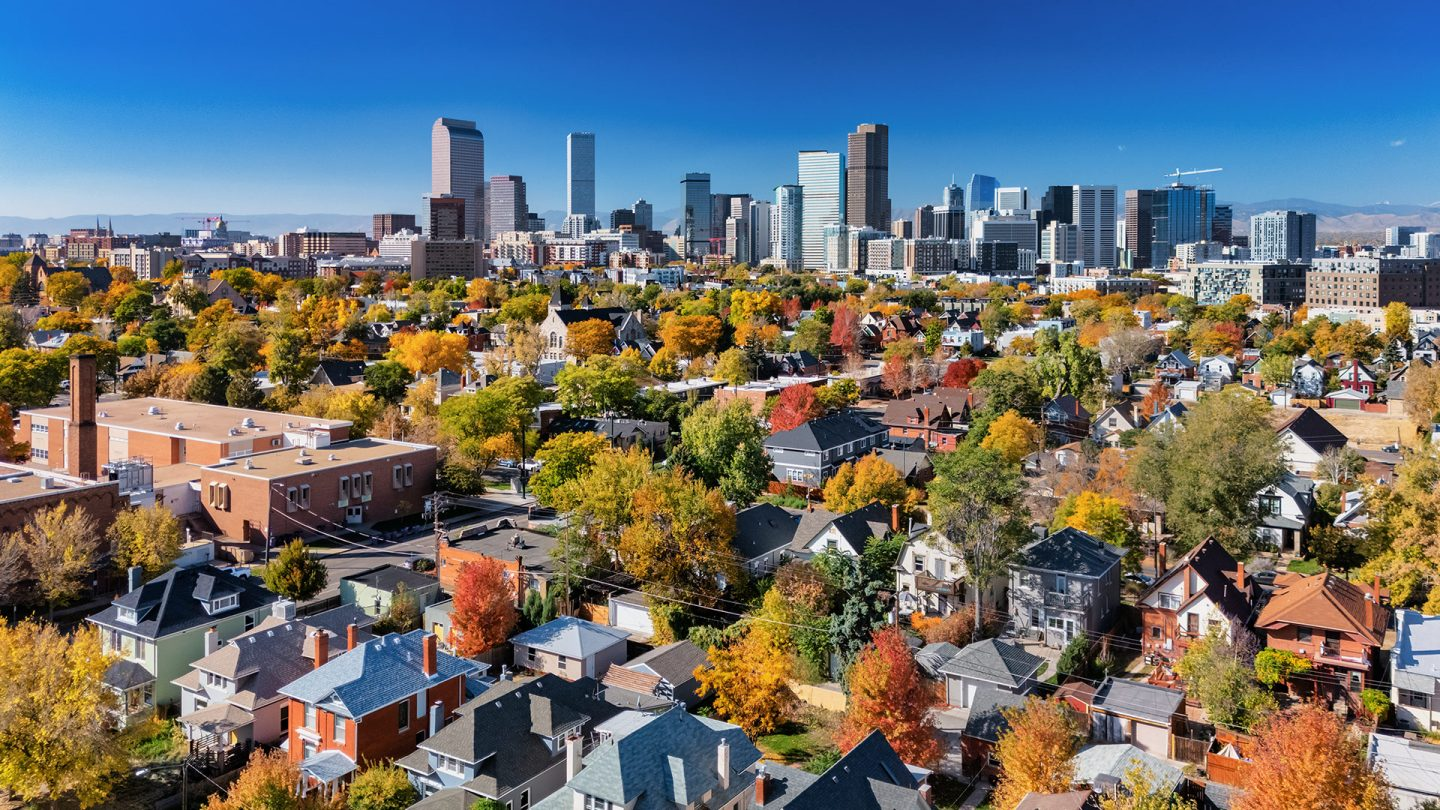
Denver combines established city neighborhoods, a strong cultural core, and direct access to the Front Range. Its varied housing, parks, employment centers, and transit connections appeal to buyers who want an urban address with room to choose their own pace.
Current conditions
A practical view of Denver housing activity, with market figures current through August 2026.
Median sale price
$641,000
City of Denver, three-month period
Typical range
$400K–$1M+
Varies widely by neighborhood and property type
Common homes
Broad mix
Bungalows, Denver Squares, condos, townhomes, and new builds
Median market time
19 days
Time from listing to contract varies by condition and price
Annual price trend
+2.5%
Median sale price change year over year
Inventory
More choice
Metro supply has moved closer to decade-high seasonal levels
Denver real estate is not one uniform market. Entry-level condominiums, renovated historic homes, and newer luxury properties can move at different speeds, even within nearby neighborhoods. Current pricing, preparation, and comparable sales should be reviewed at the property level rather than inferred from a citywide median alone.
Source: Redfin Denver Housing Market, August 2026. Market figures change frequently.
Community and lifestyle
Living in Denver can mean a walkable historic district, a quieter residential street, or a newer mixed-use neighborhood. Daily routines are shaped as much by the chosen neighborhood as by the city itself.
Independent retail and restaurants cluster around neighborhood centers such as Cherry Creek, South Broadway, and the central city, while everyday services remain distributed throughout Denver.
Washington Park, City Park, neighborhood trails, recreation centers, and regional connections create year-round options for walking, cycling, sports, and time outdoors.
Denver Public Schools and private-school options serve the city. RTD rail and bus service, major road corridors, and the A Line to Denver International Airport support regional travel.
For homebuyers
Buyers choose Denver for neighborhood variety, access to employment and culture, and the ability to balance city living with outdoor recreation. The range of housing types creates options for first purchases, move-up homes, and long-term urban ownership.
Distinct neighborhoods let buyers prioritize walkability, lot size, architecture, schools, or commute rather than accept a single citywide lifestyle.
A wider supply environment can create room for careful comparison, inspection, and negotiation when a property is not drawing immediate competition.
Mature parks, local business districts, transit, and major employment centers support everyday convenience and long-term livability.
For homeowners
Denver continues to attract buyers across many life stages, but results depend on precise positioning. Sellers benefit when condition, launch timing, and price reflect the recent activity for their specific neighborhood and home type.
Well-prepared homes in desirable micro-markets can still attract focused interest even when overall inventory gives buyers more choice.
Denver's broad buyer pool supports demand for everything from central condos to established single-family homes.
Neighborhood-level pricing and presentation help a listing compete against both resale homes and newer construction.